Henrietta Savernake–Edward Angkatell relationship
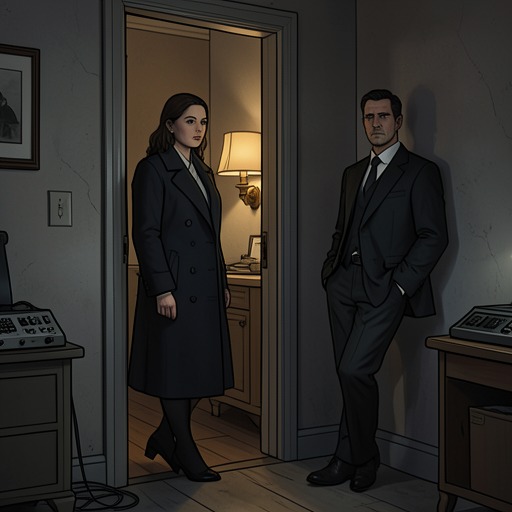
The HollowThe Henrietta Savernake–Edward Angkatell relationship is an enduring but unfulfilled bond between affection, family familiarity, and incompatible emotional commitments. Edward asks Henrietta to marry him three times, yet she refuses because her connection with John Christow has become inseparable from her sense of the possible world. The relationship therefore represents not a simple failure of love, but the painful distinction between being fond of someone and being able to build a life with them.
Identity and Background
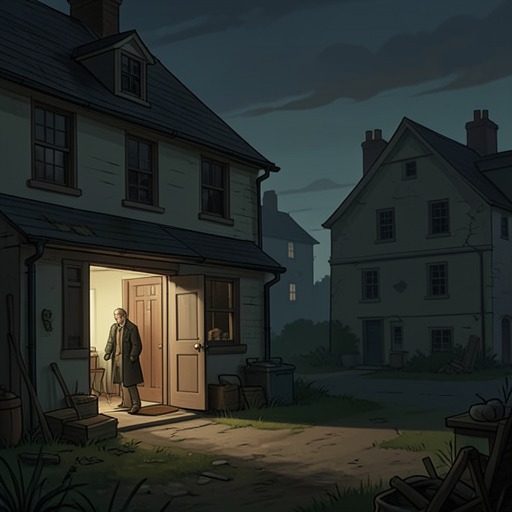
Edward Angkatell is Henrietta Savernake's second cousin and the heir of Ainswick, though he is more than twenty years younger than Lucy Angkatell and comparatively poor despite the estate's importance. After serving for a time in the diplomatic service, he resigns when he inherits Ainswick and returns to live on the property. His character is defined by quiet, bookish habits rather than ambition or display: he collects first editions and writes hesitant, ironic articles for obscure reviews. These details make Ainswick and Edward part of the same emotional landscape. He is not presenting himself as an exciting romantic hero; he offers a settled home, intellectual companionship, and continuity with a place that has always mattered to Henrietta.
The proposal is consequently tied to Ainswick as much as to Edward himself. Edward tells Henrietta that she could be peaceful there and might even be happy if she had to put up with him. He presents the estate as a home that has been waiting for her, turning marriage into an invitation to return to an established belonging rather than an escape into novelty. His offer is tender but deliberately undramatic, consistent with his self-knowledge as a man whose life consists largely of reading and quietly inhabiting Ainswick.
Repeated Proposals and Refusal
Edward's proposals form the clearest recurring action in the relationship. He has asked Henrietta to marry him three times, and each time she has refused. The repetition gives the relationship a history longer than the immediate scenes in which it is discussed, while Henrietta's refusals establish that her answer is not a momentary hesitation. Edward understands that she knows what she does not want, even if she does not possess an equally simple account of what she does want.
When he asks whether she will come to Ainswick and make it her home, Henrietta admits that she is dreadfully fond of him and that this fondness makes continuing to say no harder. Her words distinguish emotional attachment from consent to marriage. She is not indifferent to Edward, and the refusal is not made easy by lack of tenderness; precisely because she cares for him, rejecting the proposal carries moral and emotional weight. Yet affection cannot overcome the structure of her existing attachment.
Edward eventually identifies the decisive obstacle directly. He tells Henrietta that what she really means is that she will not marry him because of John Christow, and he tests the implication by asking whether she would marry Edward if John did not exist. Henrietta's response is that she cannot imagine a world without John. She rejects the idea that the situation can be reduced to a conventional triangle in which John merely needs to divorce Gerda Christow before Henrietta can marry him. Her connection with John is not presented as a straightforward plan for marriage; it is a condition of her emotional reality.
The Relationship Within Henrietta's Attachments
The contrast between Edward and John clarifies why Edward's offer remains incomplete. Henrietta tells Edward that John does not want a divorce from Gerda, and that she does not know whether she would marry John even if he did. The statement denies a conventional romantic resolution: Henrietta's devotion to John does not depend on a practical expectation that he will become available. John occupies a singular place in her imagination, and that singularity prevents her from treating Edward as an alternative husband, however kind and suitable he may be.
The relationship also gains force from the contrast between Edward's desired peace and Henrietta's continued entanglement. Edward imagines Ainswick as a place where she could become peaceful and happy. Henrietta can recognize the attraction of that possibility, but she cannot enter it while John remains central to her understanding of love and loyalty. Edward offers a form of life that might heal or settle her; Henrietta remains bound to the intensity and contradiction represented by John.
John's own marriage and affair further complicate the emotional geometry. John is married to Gerda and involved with Henrietta, but Henrietta later explains to Hercule Poirot that John tried to keep their affair light and easy because he did not want to love anyone. She says that he feared he was beginning to love her and used the affair partly to avoid thinking too much about her. This account makes Henrietta's attachment still more asymmetrical: she loves John, but John has attempted to contain their relationship rather than turn it into a shared future. Edward's proposals therefore confront not an actual rival marriage between Henrietta and John, but the more powerful fact of Henrietta's emotional allegiance.
Midge and the Deferred Possibility
After Henrietta's repeated refusals, Edward proposes to Midge Hardcastle. When Midge hesitates over the thought of Henrietta, Edward answers plainly that he has asked Henrietta three times and that she has refused each time. His disclosure makes the earlier relationship part of the terms on which he approaches Midge. Henrietta is not erased from the conversation; she remains the measure against which Midge understands what Edward is offering and what his emotional history contains.
Edward's proposal to Midge also shows the practical consequence of Henrietta's refusal. Ainswick, which Edward had imagined as Henrietta's home, becomes the setting of another possible marriage. The change does not prove that Edward's feeling for Henrietta was superficial, nor does it convert Midge into a substitute in any simple sense. Instead, it demonstrates how an uncompleted relationship can redirect the lives of everyone involved. Edward remains capable of offering commitment, but the earlier offer to Henrietta has left a visible emotional residue.
Later Meaning and Narrative Significance
After John Christow's death, Henrietta's relationship with Edward is reinterpreted through the protective action she takes on Gerda's behalf. Hercule Poirot tells Henrietta that he soon understood that he was struggling against her ingenuity and that her relatives had aided her once they understood what she wanted done. Henrietta explains that John had asked her to protect Gerda, reading his final reference to her as an appeal to carry out that duty. She believes that John loved Gerda more than he understood, and better than he loved either Veronica Cray or Henrietta.
This revelation places Edward within a network of loyalty rather than isolating the relationship as a private courtship. Henrietta's love for John does not lead to possession of him; it leads her to protect the wife who has caused her loss. Edward's earlier offer of Ainswick represents an available future, while Henrietta's response to John's final wish binds her to the consequences of his existing marriage. The relationship with Edward is therefore defined by a refusal that remains active: she cannot accept the peaceful life he offers because her love has become responsibility to a complicated past.
Edward and Henrietta embody two incompatible forms of attachment. Edward's repeated proposals, his association with Ainswick, and his quiet willingness to wait express continuity and domestic possibility. Henrietta's responses express recognition, restraint, and fidelity to an emotional truth she cannot reorganize at will. Their relationship ends not through a dramatic quarrel but through the persistence of an answer: Henrietta is fond of Edward, yet she cannot say yes. Its significance lies in that unresolved space, where a genuinely suitable future is defeated not by absence of care, but by the greater force of another bond and the obligations that bond creates.